China's Supply Chain Faces Disruptions as September Storms and National Holidays Delay Deliveries Through October 2026
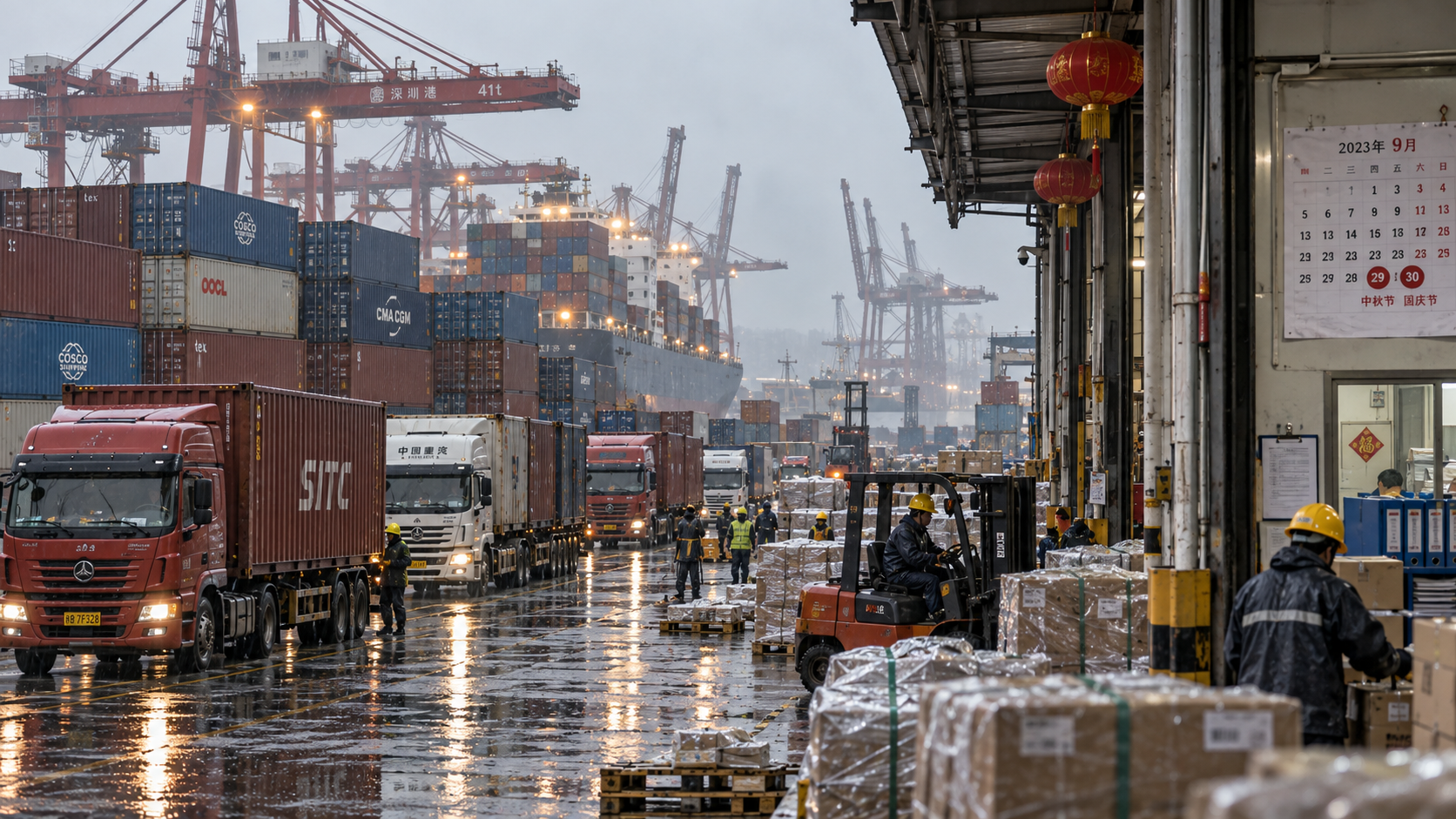
Severe weather conditions in early September, combined with the Mid-Autumn Festival and China's National Day holiday period, have placed additional pressure on manufacturing operations and logistics networks. Supply shortages, production backlogs, and increased order volumes are contributing to shipment delays affecting customer orders scheduled for late September and October 2026.
Severe Weather Disrupts Manufacturing and Logistics Operations
During early September 2026, adverse weather conditions and storm-related disruptions affected manufacturing and logistics activities in parts of southern China, creating challenges for production scheduling, material transportation, and warehouse operations.
Such disruptions can affect the movement of raw materials and finished products between manufacturing facilities, distribution centers, and shipping terminals.
As a result, affected manufacturers have faced difficulties maintaining their original production schedules, with delays potentially extending to orders scheduled for delivery in subsequent weeks.
Mid-Autumn Festival and National Day Holidays Add Pressure to Production Capacity
In addition to weather-related challenges, China's manufacturing sector has faced further operational pressure due to the Mid-Autumn Festival and National Day holiday periods.
During these major national holidays, many factories, raw material suppliers, transportation providers, and logistics companies temporarily suspend operations or operate with reduced staffing.
Following the holidays, manufacturers must process accumulated orders while simultaneously handling newly received purchase requests.
This concentration of demand can create temporary production bottlenecks, particularly among manufacturers operating near their maximum capacity.
To address these challenges, some factories have introduced extended working hours, additional production shifts, and revised production schedules. Nevertheless, clearing accumulated backlogs while maintaining strict product quality standards requires additional time.
Supply Shortages and Production Backlogs Affect September and October Shipments
The combined impact of weather-related disruptions, holiday shutdowns, and increased demand has contributed to tighter supply conditions across affected manufacturing and distribution networks.
Temporary shortages of raw materials, limited production capacity, and accumulated orders have made it increasingly challenging for certain suppliers to meet previously scheduled delivery commitments.
As a consequence, some customer orders originally expected to be completed or shipped during late September and throughout October 2026 may experience delays.
In addition, increased shipping demand following the holiday periods may place additional pressure on freight availability, cargo handling, customs processing, and international transportation arrangements.
These circumstances have created uncertainty in delivery schedules for importers and overseas customers relying on Chinese manufacturing and supply networks.
Manufacturers and Suppliers Accelerate Recovery Efforts
In response to these challenges, manufacturers and suppliers have been implementing measures to stabilize production and minimize delivery disruptions.
These measures include increasing production shifts, prioritizing outstanding orders, strengthening coordination with material suppliers, and arranging alternative logistics solutions where available.
However, manufacturers continue to emphasize the importance of maintaining product quality and compliance with technical specifications rather than compromising quality to accelerate deliveries.
Industry participants expect supply chain operations to improve progressively as production backlogs are cleared and manufacturing capacity returns to normal operating levels.
Customers Advised to Allow Additional Lead Time
Given the current supply chain pressures, businesses importing goods from China are encouraged to maintain close communication with their suppliers and allow greater flexibility in delivery planning.
For orders affected by production or transportation disruptions, revised shipment dates will depend on actual manufacturing progress, material availability, final quality inspections, and logistics arrangements.
Suppliers are continuing to work closely with manufacturing partners to expedite pending shipments and minimize the impact on customers' business operations and project schedules.
Although production and logistics activities are gradually returning to normal, some outstanding orders may continue to experience extended lead times during October 2026.
Continued cooperation, understanding, and proactive communication among manufacturers, suppliers, logistics providers, and customers will remain essential to restoring stable supply chain operations and ensuring reliable deliveries in the coming weeks.